


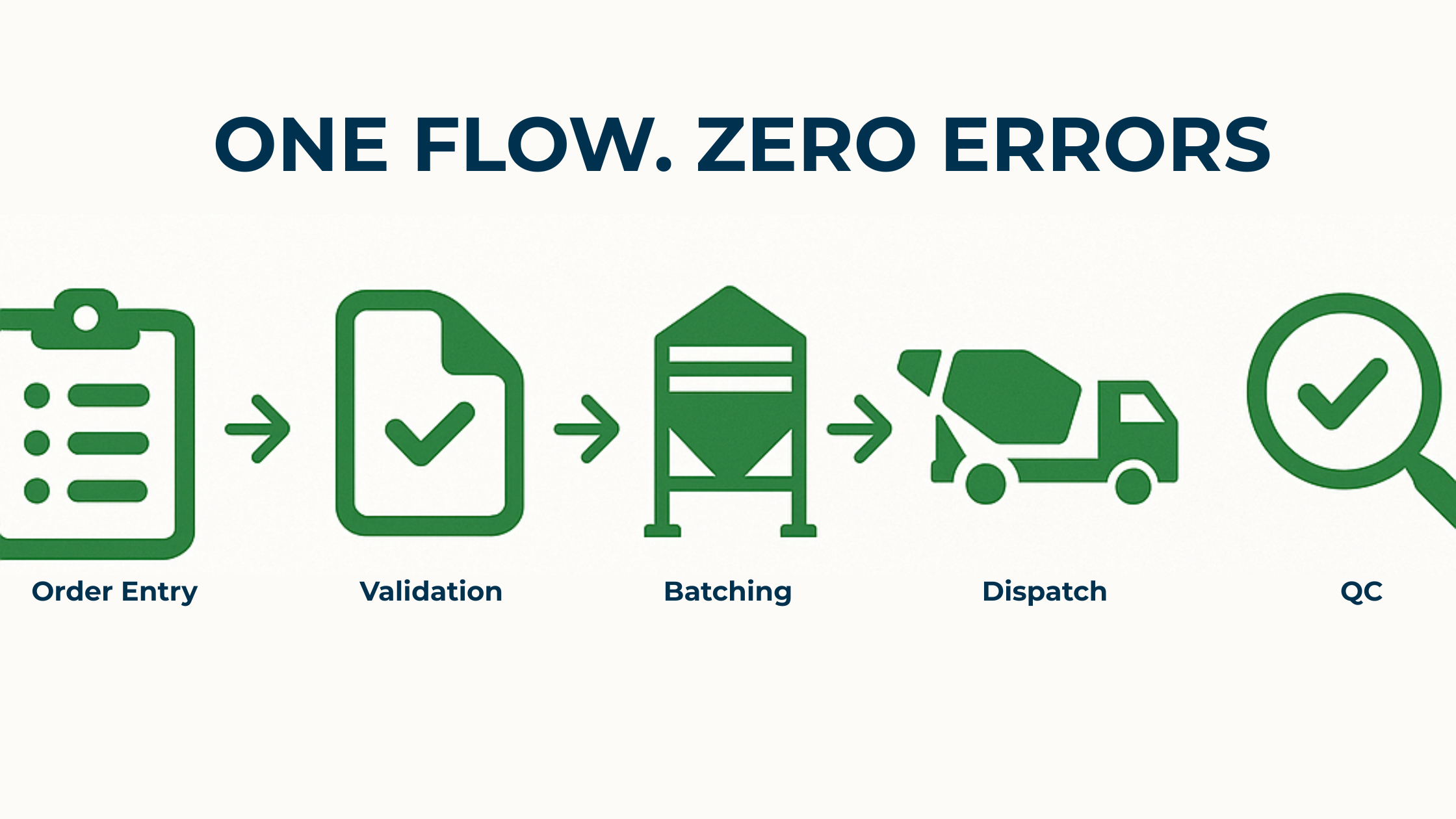
In the concrete industry, batching accuracy is everything. Even small deviations in mix design can lead to rejected loads, costly rework, or serious safety risks on site. For decades, plants have relied on batching systems in isolation—often disconnected from order entry, fleet scheduling, or quality control processes.
The result? Errors from manual re-entry, delays in communication, and wasted materials.
That’s where data integration is transforming batching operations. By connecting ordering platforms, batching systems, fleet management, and quality controls into one seamless workflow, concrete manufacturers are achieving unprecedented levels of accuracy, efficiency, and profitability.
Why Batching Accuracy Matters
Concrete isn’t a “close enough” business. Getting the right proportions of cement, aggregates, water, and additives is non-negotiable. Inaccurate batching leads to:
- 🚫 Rejected Loads – Contractors refuse concrete that doesn’t meet spec.
- 💸 Wasted Material – Incorrect mixes have to be scrapped.
- ⏳ Lost Time – Re-batching delays pours and disrupts schedules.
- ⚠️ Liability Risks – Structural integrity can be compromised by poor mix quality.
These problems often stem not from batching equipment itself—but from the gaps between systems.
The Problem: Disconnected Systems
Here’s where many concrete plants lose accuracy:
- Order Entry – A dispatcher enters customer specs by phone.
- Batching – Operators manually re-key mix details into the batching console.
- Fleet – Drivers rely on paper dockets that may be outdated or unclear.
- Quality Control – Testing happens late, sometimes after issues have already occurred.
Every handoff increases the risk of mistakes.
How Data Integration Improves Batching Accuracy
1. Single Source of Truth
When the POS system, batching software, and delivery schedules are integrated, order details flow automatically. No manual re-entry. No transcription errors.
2. Real-Time Validation
Integrated systems can validate orders against mix designs before batching begins. If a customer requests a mix that doesn’t match available materials, the system flags it instantly—avoiding wasted loads.
3. Live Monitoring of Material Inputs
Moisture sensors, additive compatibility checks, and environmental adjustments can feed directly into the batching process. Data integration ensures the system adjusts automatically for conditions like humidity or aggregate moisture.
4. Seamless Dispatch & Delivery Sync
Integrated data ensures drivers receive accurate, up-to-date load tickets digitally. Any last-minute changes flow instantly to both batching and fleet scheduling—removing guesswork on the road.
5. Analytics for Continuous Improvement
Integration isn’t just about accuracy in the moment. With all data in one place, managers can track error rates, optimise recipes, and identify recurring issues—driving long-term improvements.
Real-World Benefits of Data Integration
Concrete suppliers who embrace integration report:
- 📉 40–60% reduction in batching errors
- ⏱ Faster turnaround on orders and deliveries
- 💰 Significant savings from reduced waste
- 🏗 Improved customer satisfaction and trust
Accuracy Is Integration
Concrete batching accuracy isn’t just about the plant—it’s about the systems surrounding it. By integrating data across ordering, batching, fleet, and quality control, manufacturers eliminate errors before they happen and deliver consistency every time.
👉 At Integrated Concrete Systems, we specialise in designing end-to-end integrations for concrete businesses that boost accuracy, cut waste, and maximise profitability.
📞 Call us on 1300 369 268 or visit https://integratedconcrete.systems to book your free efficiency evaluation.
Related Posts

March 12, 2026
Beyond Spreadsheets: Why Modern Concrete Operations Demand Integrated Solutions
Surfing through spreadsheets is a Broken Link that Costs Your Growth! Consider a typical morning…

November 24, 2025
Leveraging Data Analytics for Smarter Concrete Operations
In the concrete industry, success isn’t just about strong materials — it’s about strong decisions.From…

November 7, 2025
Reducing Errors in Concrete Batching: Best Practices for Modern Businesses
Concrete production is a high-stakes process where precision matters. A single batching error—whether in mix…

November 5, 2025
Beyond Spreadsheets: Why Modern Concrete Operations Demand Integrated Solutions
The Scenario That Keeps Operations Managers Awake Picture this: A customer orders concrete for a…