

The concrete industry is built on precision, efficiency, and coordination. From taking customer orders to batching, scheduling deliveries, and managing invoices, every step needs to be seamless. But for many concrete businesses, manual processes and disconnected systems create bottlenecks that slow down operations and increase costs.
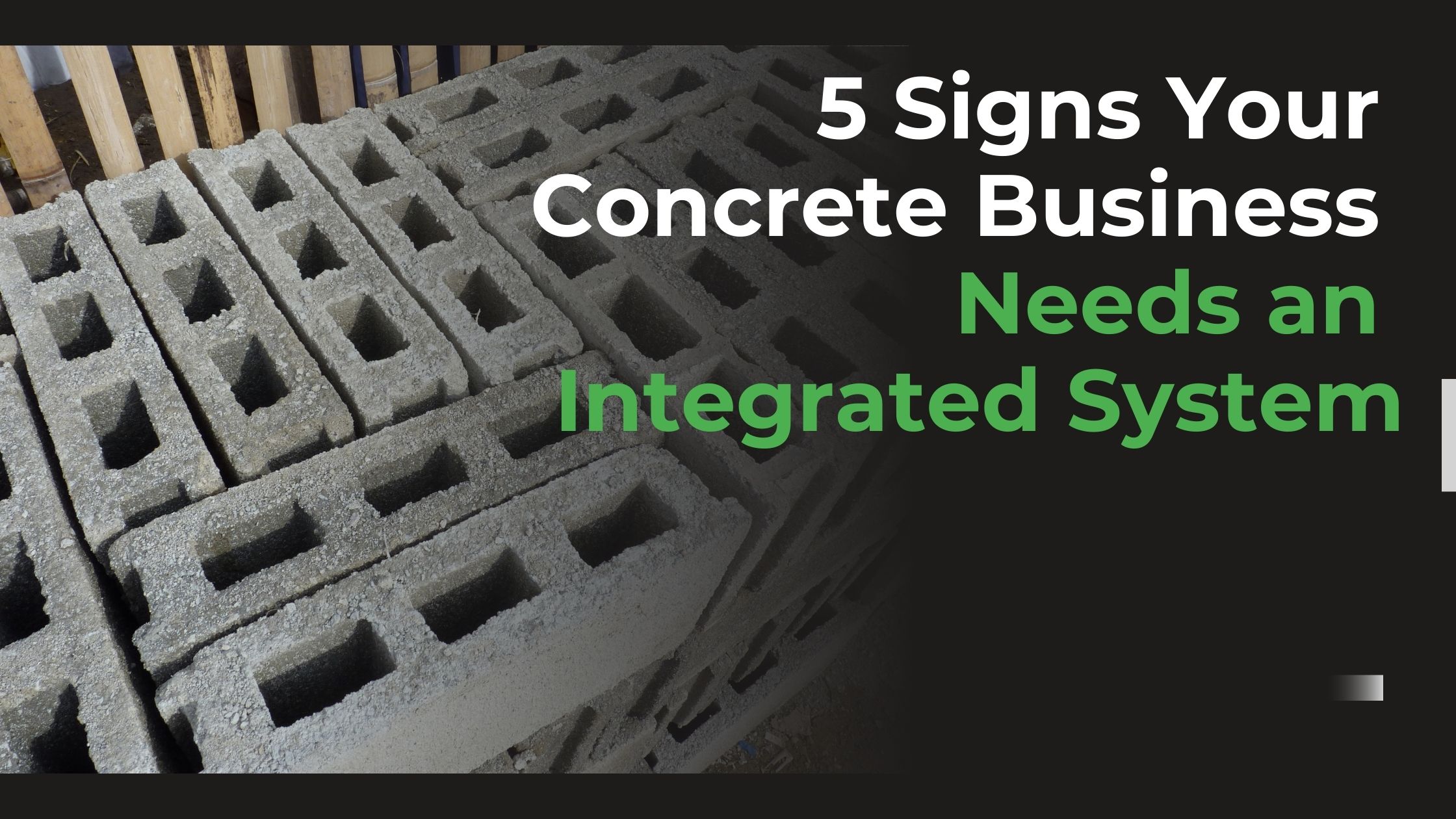
If you’re experiencing delays, miscommunication, or inefficiencies, it might be time to integrate your systems. Here are five key signs that your concrete business needs an integrated system to keep things running smoothly.
1. Your Team Is Drowning in Manual Data Entry
The Problem
If your team is constantly re-entering the same information into different systems, it’s a sign that your processes are outdated. Manually transferring data between order management, batching, and invoicing systems leads to:
- Time-consuming tasks that slow down operations
- Higher risk of errors, such as incorrect mix instructions or wrong delivery times
- Inconsistent data across different platforms
The Solution
An integrated system eliminates duplicate data entry by connecting all business functions—from orders and batching to fleet tracking and invoicing. With a single data entry point, information flows automatically across all departments, reducing workload and preventing costly mistakes.
2. Orders Are Frequently Delayed or Miscommunicated
The Problem
Are customers calling to check on their orders because deliveries are late or batching instructions were incorrect? Delays and miscommunication can result in:
- Unhappy customers due to unpredictable deliveries
- Wasted resources from incorrect batching
- Frustrated employees struggling to manage changing schedules
The Solution
An integrated order management system ensures that customer orders:
- Sync directly to your batching system, minimising manual input errors
- Update in real-time, so dispatch teams can track deliveries
- Provide automated customer notifications, keeping clients informed
3. Your Fleet Scheduling Is Chaotic
The Problem
Managing fleet schedules manually—whether through whiteboards, spreadsheets, or separate software—often leads to:
- Trucks running behind schedule
- Drivers waiting at plants for batching to be completed
- Fleet underutilisation leading to wasted fuel and resources
The Solution
A connected fleet management system provides:
- Real-time GPS tracking to optimise deliveries
- Automated scheduling that aligns truck dispatch with batching times
- Instant updates for drivers, dispatchers, and customers
By integrating fleet tracking with batching and ordering, your trucks move efficiently and on time.
4. Your Business Struggles with Payment Processing & Invoicing
The Problem
If your finance team spends hours chasing payments or reconciling invoices, you’re losing time and money. Common issues include:
- Invoices manually created after delivery, leading to delays
- Missing or incorrect payment details, requiring follow-ups
- Inconsistent pricing, causing disputes with customers
The Solution
An automated invoicing and payment system ensures:
- Invoices are generated immediately after delivery
- Payment records sync automatically with customer accounts
- Consistent pricing and terms for every order
With faster invoicing and digital payment options, cash flow improves, and administrative time is reduced.
5. You Lack Visibility Into Your Operations
The Problem
Running a concrete business without real-time insights into your operations can be a major risk. If you can’t track orders, fleet activity, and financials in one place, you might face:
- Inefficient decision-making due to incomplete data
- Production slowdowns caused by unknown bottlenecks
- Poor customer experience from inconsistent service
The Solution
An integrated dashboard provides:
- Live order tracking from placement to delivery
- Fleet and driver insights to optimise schedules
- Financial reporting with real-time invoicing and payment status
With an all-in-one system, you get full control over operations, allowing you to make informed decisions that keep your business running smoothly.
ICS: The Future of Integrated Concrete Operations
If you’re dealing with manual data entry, delivery miscommunication, fleet inefficiencies, slow invoicing, or lack of operational insights, it’s time to integrate your systems.
- Eliminate redundant processes and reduce costly errors
- Connect all business functions for smoother operations
- Improve customer satisfaction with accurate deliveries and updates
At Integrated Concrete Systems (ICS), we help concrete businesses link their ordering, batching, fleet, and invoicing systems into one seamless platform.
Want to streamline your business? Book a free consultation today.
Related Posts
March 12, 2026
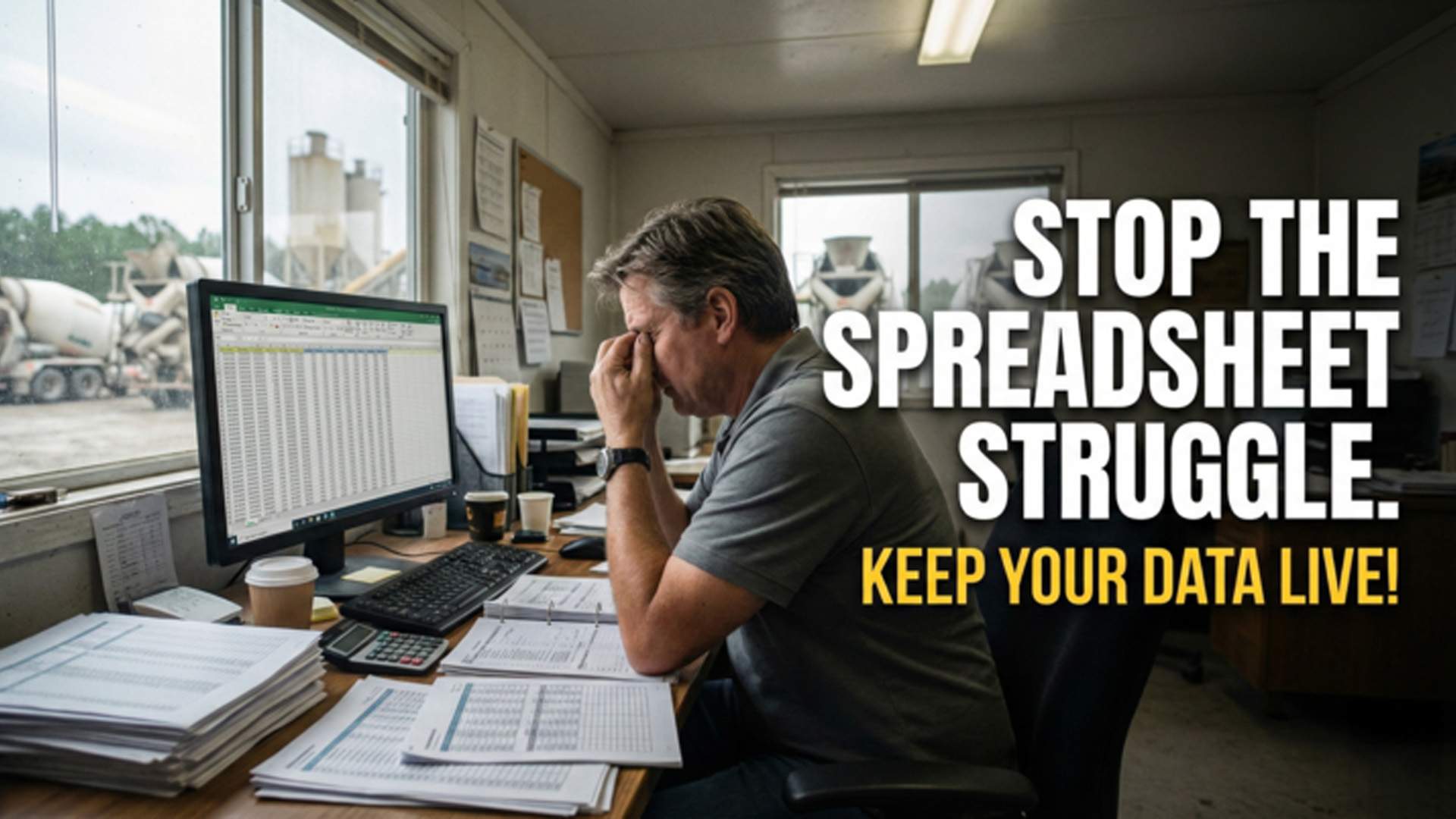
Beyond Spreadsheets: Why Modern Concrete Operations Demand Integrated Solutions
Surfing through spreadsheets is a Broken Link that Costs Your Growth! Consider a typical morning…

November 24, 2025
Leveraging Data Analytics for Smarter Concrete Operations
In the concrete industry, success isn’t just about strong materials — it’s about strong decisions.From…

November 7, 2025
Reducing Errors in Concrete Batching: Best Practices for Modern Businesses
Concrete production is a high-stakes process where precision matters. A single batching error—whether in mix…

November 5, 2025
Beyond Spreadsheets: Why Modern Concrete Operations Demand Integrated Solutions
The Scenario That Keeps Operations Managers Awake Picture this: A customer orders concrete for a…